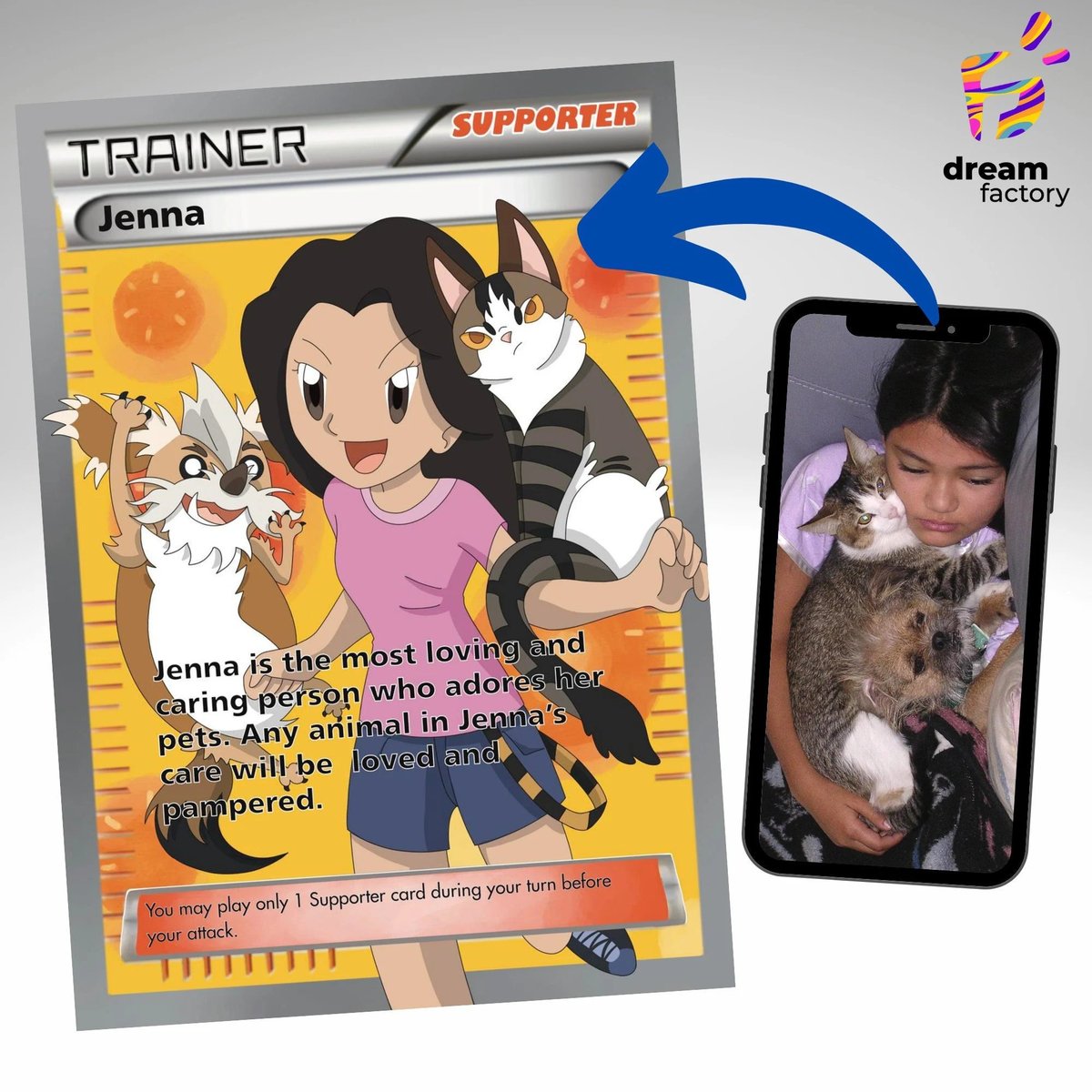
There’s a unique thrill that comes with holding a perfectly crafted custom trainer card – whether it’s a vibrant digital masterpiece featuring you and your beloved pet, or a badge of honor you designed yourself. It’s more than just an image; it’s a snapshot of your passion, a personalized emblem of your journey in a world of endless possibilities. But the real magic often begins when you start Saving & Sharing Your Custom Trainer Card with the people who matter most.
It’s one thing to admire your unique creation in solitude, but it’s another entirely to watch a friend gasp in delight or a family member tear up as they see themselves, or you, immortalized in a style inspired by one of the most beloved franchises in history. Sharing your custom trainer card isn't just about sending a file; it's about transmitting joy, celebrating individuality, and forging connections. This isn't just a guide; it's your playbook for making that experience as seamless, impactful, and enjoyable as possible.
At a Glance: Your Quick Guide to Sharing Your Trainer Card
- Understand Your Card's Origin: Whether it's a commissioned piece from an artist like Arianna or a design from an online generator, how you receive it impacts how you save it.
- Prioritize High Resolution: Always aim to save the highest quality digital file possible to ensure crispness for both digital sharing and potential printing.
- Know Your File Formats: JPG for smaller file sizes, PNG for transparent backgrounds and maximum detail—choose based on your sharing needs.
- Digital Sharing is Easy: Email, messaging apps, and social media are your go-to for instant gratification.
- Physical Sharing is Special: Print your card, create actual physical cards, or even turn it into canvas art for heartfelt gifts.
- Attribute When Due: If an artist created your card, a quick shout-out is always appreciated.
- Revisions are Your Friend: For commissioned art, don't be shy about requesting changes until you're 100% happy before finalizing (like Arianna’s free unlimited revisions!).
The Heart of the Matter: Why Sharing Your Trainer Card Is So Special
Think back to the excitement of collecting trading cards. Each card represented a character, a skill, a memory. A custom trainer card takes that nostalgia and fuses it with your personal story. It’s a declaration of who you are as a trainer, often accompanied by your real-life companions – be it a cherished pet or a significant other. When you share this card, you're not just showing off a cool picture; you're inviting others into a piece of your world, a testament to your personality and passions.
It's a fantastic conversation starter, a unique digital avatar, or even the perfect, deeply personal gift. Imagine the smile on your loved one’s face when they unwrap a custom canvas print of themself as a trainer, their loyal companion by their side. This isn't just about pixels on a screen; it's about emotional connection and shared experiences. Artist Arianna, who turns people and pets into custom trainer cards, understands this deeply. Her clients often say it’s "the best gift for your loved one," and the fact that you receive "13 copies of your custom trainer card to share with your family and friends" underscores the inherent social nature of these unique creations.
Your Trainer Card's Origin Story: Where Did It Come From?
Before you can confidently share your custom trainer card, you need to understand its journey to you. The method of creation significantly impacts how you’ll receive the final product and, consequently, how you'll save it. There are generally two main paths to obtaining these personalized masterpieces.
The Custom Commissioned Masterpiece: Crafted by an Artist
This is often the route for those seeking truly unique, hand-drawn art, like the services offered by professional cartoonists and graphic designers. You provide photos and details, and a talented artist brings your vision to life.
How You Receive It:
Once your artwork is ready, the artist will typically notify you via email. This email is your golden ticket. It usually contains:
- A direct download link to your high-quality digital illustration.
- Attachments of the image file (often a
.jpgfile in HD resolution, suitable for printing anywhere you like). - A preview link where you can review the artwork, request any necessary changes, and finally approve it for completion. Services like Arianna's pride themselves on "free unlimited revisions" until you are "100% happy." This approval step is crucial, as it ensures the final file you save is exactly what you envisioned.
It’s vital to ensure you download the final, approved version. This will be the highest resolution, most polished rendition of your custom card, perfect for both digital display and physical production.
The DIY Online Generator Adventure: Your Own Creative Journey
For those who enjoy a more hands-on approach, numerous online tools allow you to design your trainer card from scratch. These generators let you choose backgrounds, select trainers, pick your team of Pokémon, and add personalized text, all within a browser.
How You Receive It:
Unlike a commissioned piece, an online generator usually presents your finished card directly on the webpage. Your primary method for "receiving" it is often:
- A "Download" Button: The best-case scenario. Most reputable generators provide a clear button to download your custom card as an image file (e.g., JPG or PNG). This ensures you get the file at its intended resolution and quality.
- Right-Click & Save: If a dedicated download button isn't available, you might be able to right-click on the image and select "Save Image As..." This can sometimes work, but be cautious – the resolution might be lower than a dedicated download function.
- Screenshot: The last resort. Taking a screenshot of your screen is often the lowest quality option, as it captures your entire desktop, not just the image, and often results in lower resolution and image artifacts. Avoid this if at all possible.
Tools like the Pokémon Trainer Card Maker on Pokecharms, which lets you create your own Pokémon trainer card by designing your ultimate trainer card with custom backgrounds, trainers, and teams, typically offer a direct download option to ensure you get the best quality. Always look for that download button first!
Saving Your Masterpiece: A Step-by-Step Guide for Digital Preservation
Once your custom trainer card exists, whether freshly approved by an artist or just generated online, the next critical step is to save it properly. This isn't just about having a copy; it's about preserving its quality for all future sharing endeavors.
From Professional Artists: Mastering the Download Link
When you commission a custom piece, you're paying for high-quality art, so ensuring you capture that quality in your save is paramount.
- Check Your Email Diligently: Your artist will likely send you an email containing the final artwork. This might be an attachment or a link to a cloud storage service (like Google Drive, Dropbox) or a dedicated client portal.
- Download the High-Resolution File: If it's an attachment, simply download it. If it's a link, click it and look for the specific download icon or option (often an arrow pointing down, or text like "Download Original"). Do not just right-click and save the preview image from the email or webpage, as this is often a lower-resolution version. Arianna's service, for example, promises a "jpg file in HD resolution," so make sure you're getting that full quality.
- Create a Dedicated Folder: On your computer or phone, make a folder specifically for your custom trainer card. This helps keep it organized and easy to find later. A name like "My Custom Trainer Card" or "Pokémon Card Art" works well.
- Rename Your File Clearly: Instead of
image12345.jpg, rename it to something descriptive like[YourName]TrainerCard_Final.jpgor[PetName]CustomCard_HD.jpg. This makes it simple to locate, especially if you have multiple versions or other art files. - Backup, Backup, Backup: Once downloaded, consider backing up your file. Save it to an external hard drive, a cloud service (Google Drive, Dropbox, OneDrive), or even send a copy to yourself via email. Losing this unique piece of art would be a shame!
From Online Generators: The Download Button Is Your Best Friend
For cards created using online tools, the process is a bit more direct, but vigilance is still key to avoiding quality pitfalls.
- Locate the "Download" or "Save Image" Button: After you’ve finalized your design, scour the interface for a prominent button that explicitly says "Download," "Save Image," "Export," or similar. This is almost always the best way to get the highest resolution version the generator offers.
- Choose Your File Type (If Prompted): Some generators might ask if you want a JPG or PNG.
- JPG (JPEG): Generally good for photos and images with continuous tones. It’s smaller in file size but uses "lossy" compression, meaning some detail is discarded.
- PNG: Better for images with sharp lines, text, or transparent backgrounds (if your card has one). It uses "lossless" compression, preserving all detail but resulting in a larger file. For trainer cards, PNG often provides superior clarity for text and artwork.
- Review the Downloaded File: Open the image you just downloaded. Zoom in to check for any pixelation, blurriness, or unexpected artifacts. If it looks pristine, you're good. If not, revisit the generator and look for other download options or settings. Sometimes, a "High Quality" or "HD" checkbox might be missed.
- Avoid Screenshots if Possible: While quick, taking a screenshot (e.g., Print Screen on Windows, Command+Shift+3/4 on Mac, or built-in phone screenshot tools) almost always results in a lower-resolution image than a direct download. It captures your screen pixels, not the original image file’s pixels, and might include browser elements. Only use this as a last resort if no other saving option is available.
- Organize and Rename: Just like with commissioned art, rename your file descriptively and save it to an easily accessible folder.
Getting Ready to Share: Optimizing Your Trainer Card for Every Audience
Saving your card is the first step; preparing it for sharing is the next. Different sharing platforms and intentions (digital display vs. physical print) require different considerations to ensure your card looks its absolute best.
Choosing the Right File Format and Size
This decision often boils down to balancing image quality with file size, especially when sharing digitally.
- When to Use JPG (JPEG):
- Pros: Smaller file sizes, faster uploads and downloads, universally compatible.
- Cons: "Lossy" compression means some image data is permanently discarded. Re-saving a JPG multiple times can degrade quality.
- Best for: Emailing to multiple people, sharing on social media platforms that re-compress images (most do), or for web display where load times are crucial.
- Example: Sending a quick copy to a friend via WhatsApp.
- When to Use PNG:
- Pros: "Lossless" compression means no quality loss, supports transparency (if your card has a unique shape or transparent background), ideal for graphics with sharp lines and text.
- Cons: Larger file sizes, which can mean slower uploads or consume more data.
- Best for: Archival purposes, printing, professional presentations, or when absolute fidelity to the original artwork is critical.
- Example: Sending the master file to a printing service, or saving the final version for your digital portfolio.
Resizing for Social Media vs. Print: - Social Media: Most platforms (Instagram, Facebook, X/Twitter) have recommended image dimensions and file size limits. Uploading a massive, high-resolution file won't necessarily look better; the platform will compress it anyway, sometimes poorly. It's often better to mildly compress or resize your image to fit their recommendations before uploading. A good general rule for social media is around 1080px on the longest side for images.
- Print: For printing, always use the highest resolution file you have. You want at least 300 Dots Per Inch (DPI) at the intended print size. If your original file is HD resolution (like Arianna's), it’s well-suited for printing without loss of quality. Resist the urge to print a low-resolution screenshot, as it will look pixelated and blurry.
Quality Control: Your Card Deserves to Look Its Best
Before hitting "send" or "print," take a moment for a final quality check.
- Why High Resolution Matters: The higher the resolution (more pixels), the more detail your image contains. For commissioned artwork, artists provide HD files precisely so they look fantastic on large screens and in print. A low-resolution image will appear jagged and unprofessional, regardless of how great the art itself is.
- Avoiding Pixelation: Pixelation occurs when an image is enlarged beyond its native resolution, revealing the individual color squares (pixels) that make it up. Always view your image at 100% zoom (or even 200%) on your screen to inspect for pixelation, especially if you're planning a large print. If it looks good zoomed in, it will look good printed or shared.
- Color Accuracy: Colors can sometimes shift slightly between devices or when converting file formats. If color accuracy is critical (e.g., matching a specific shade), check the image on a couple of different screens if possible. For printing, most professional print shops can do color correction or offer proofing services.
Sharing Your Custom Trainer Card: Pathways to Your Friends and Family
Now for the fun part: showing off your magnificent creation! You have a multitude of options, each suited for different audiences and levels of immediacy.
Digital Dispatches: Instant Gratification
The quickest and most common way to share your custom trainer card is digitally.
- Email: The Classic Choice
- How: Attach your high-resolution JPG or PNG file to a standard email.
- Best For: Sending to individuals or small groups where you want to ensure they receive a quality file that can be easily downloaded and saved. Ideal for sending the "master" copy to a family member for printing.
- Tip: If the file is very large, some email providers might compress it or require you to send it via a cloud link (which is often better for quality anyway).
- Messaging Apps (WhatsApp, Messenger, Discord, Telegram)
- How: Select the image from your photo gallery and send it directly in a chat.
- Best For: Quick, informal shares with close friends and family. It’s immediate and personal.
- Caveat: Many messaging apps automatically compress images to save data and speed up delivery. The quality might be slightly reduced compared to the original file. If quality is paramount, consider sending a link to a cloud storage file instead.
- Social Media (Instagram, Facebook, X, TikTok)
- How: Upload your card as a regular post, story, or profile picture.
- Best For: Broad sharing, showcasing your card to a wider audience, and engaging with your followers. It’s excellent for making a statement about your personality or interests.
- Considerations: Use relevant hashtags (e.g., #CustomTrainerCard #PokemonArt #[YourPetName]) to increase visibility. Remember that social media platforms heavily compress images, so ensure your original upload is high quality.
- Attribution: If your card was commissioned, always tag or mention the artist! Arianna, with her "5,000+ Happy Customers," would surely appreciate the shout-out. It helps them, and it gives context to your awesome card.
- Cloud Storage (Google Drive, Dropbox, OneDrive)
- How: Upload your high-resolution file to your preferred cloud service, then generate a shareable link.
- Best For: Sharing the absolute highest quality file with a specific group without email size limits or messaging app compression. Excellent for collaborative projects or sending print-ready files to a print shop or family member who will handle printing.
- Tip: Always double-check the sharing permissions to ensure only intended recipients can access the file.
Bringing It to Life: Physical Cards and Prints
While digital sharing is convenient, there's something incredibly tangible and special about a physical representation of your custom trainer card.
- Printing Services (Local vs. Online)
- How: Upload your HD digital file to an online print service (e.g., Shutterfly, VistaPrint, local photo labs) or take it to a local print shop on a USB drive. You can choose various print sizes, paper types, or even specialty items.
- Best For: Creating high-quality prints for framing, gifting, or making actual card replicas.
- Tip: For best results, ask for guidance on resolution and file setup. Many services have templates or specifications for common products.
- Creating Actual Physical Cards (Not Just Prints!)
- How: Some artists, like Arianna, offer "Digital File + Physical Card" packages, where you receive "a real printed physical card (not a sticker!)" in addition to the digital file. This is the most authentic way to get a card that feels official.
- Best For: The ultimate gift, a collector's item, or a display piece. It’s durable and designed to mimic the feel of an actual trading card.
- Gifts That Last: Canvas and Framed Prints
- How: Services that offer custom art often include options like "Digital File + Physical Card + Canvas 11x14in," providing a "high-quality Canvas, gallery standard 1.25”, wooden frame."
- Best For: Major gifts for loved ones, commemorating a special pet, or creating a focal point for your home decor. A canvas print transforms your card into a piece of art that can adorn any wall.
Common Questions & Smart Answers About Your Trainer Card
Even with all this guidance, a few questions often pop up when people are ready to share their custom trainer cards. Let’s tackle them head-on.
Q: Can I share my custom trainer card on public forums or communities?
A: Absolutely! Sharing on forums, Discord servers, Reddit, or other online communities is a fantastic way to connect with fellow enthusiasts. Just be mindful of community rules about self-promotion or image posting. If your card was created by an artist, it's always good etiquette (and often a requirement) to credit them. For example, a quick "Artwork by [Artist's Name/Website]" goes a long way.
Q: What if the quality looks bad when I share it on social media, even if my original file is high-res?
A: This is a common issue! Social media platforms often compress uploaded images to optimize load times and save storage space. While you start with a high-res file, the platform might downgrade it. To mitigate this:
- Start with the highest quality: Always upload your best possible file.
- Check platform guidelines: Some platforms publish recommended image dimensions and file sizes. Resizing your image before uploading to these specs can sometimes result in better compression.
- Avoid re-uploading compressed versions: Don't download a compressed version from one social media site and re-upload it to another; always go back to your original high-res file.
Q: How many times can I share my digital card? Are there limits?
A: Digitally, you can share your card an unlimited number of times! Once you have the digital file, it's yours to share with as many people as you wish, across as many platforms as you like. For physical items, such as the "13 copies" Arianna provides, that number is finite, but you can always order more prints or create new physical items from your digital file.
Q: Should I watermark my card, especially if it's a commissioned piece?
A: If you are the commissioner (meaning you paid for the art), the ownership of the artwork usually transfers to you for personal use. You generally don't need to watermark it yourself, as the artist should have delivered the final unwatermarked version. However, if you are an artist creating cards, watermarking your proofs or samples is a good idea to protect your work before final payment and delivery. As a recipient, if you're concerned about unauthorized use of your custom card, you can certainly add a small, unobtrusive watermark (e.g., your name or social media handle) when sharing publicly, but it's largely a personal preference.
Q: My friend received a physical card from Arianna's service. Can I print more copies from my digital file?
A: Yes, absolutely! If you have the "Digital File Only" or the digital file from any of Arianna's packages, you have the high-resolution JPG file. This file is "suitable to print anywhere you like." You can take this file to any local or online print service and order additional physical cards, posters, canvases, or other merchandise. The beauty of having the digital master is that you have complete control over future physical reproductions for personal use.
Beyond the Initial Share: Keeping the Spirit Alive
Your custom trainer card isn't a fleeting trend; it's a timeless representation of you. While the initial joy of sharing is immense, think about how you can keep that spirit alive for years to come.
Archiving Your Card for Posterity: Treat your digital file like a cherished family photo. Keep it safe in multiple locations: on your computer, backed up to an external drive, and securely stored in cloud storage. This ensures that even if a device fails, your custom masterpiece is preserved. Consider creating a "Digital Vault" folder for all your personalized digital art.
Creating New Memories with Your Card: Don't just share it once and forget it. Use your trainer card as your avatar in online communities, your signature in emails, or even as a unique background for your phone or computer. The more you incorporate it into your digital life, the more it becomes an extension of you. Some enthusiasts even use their cards as part of personalized gifts for birthdays, holidays, or special occasions, turning it into a mug, a phone case, or a t-shirt.
The act of Saving & Sharing Your Custom Trainer Card is a joyous experience, a blend of personal expression and thoughtful connection. By understanding the nuances of how you receive your card, how to preserve its quality, and the best ways to share it with the world, you’re not just sending an image – you’re sending a piece of your heart, beautifully captured and ready to inspire smiles wherever it goes. So go forth, trainer, and share your journey with pride!